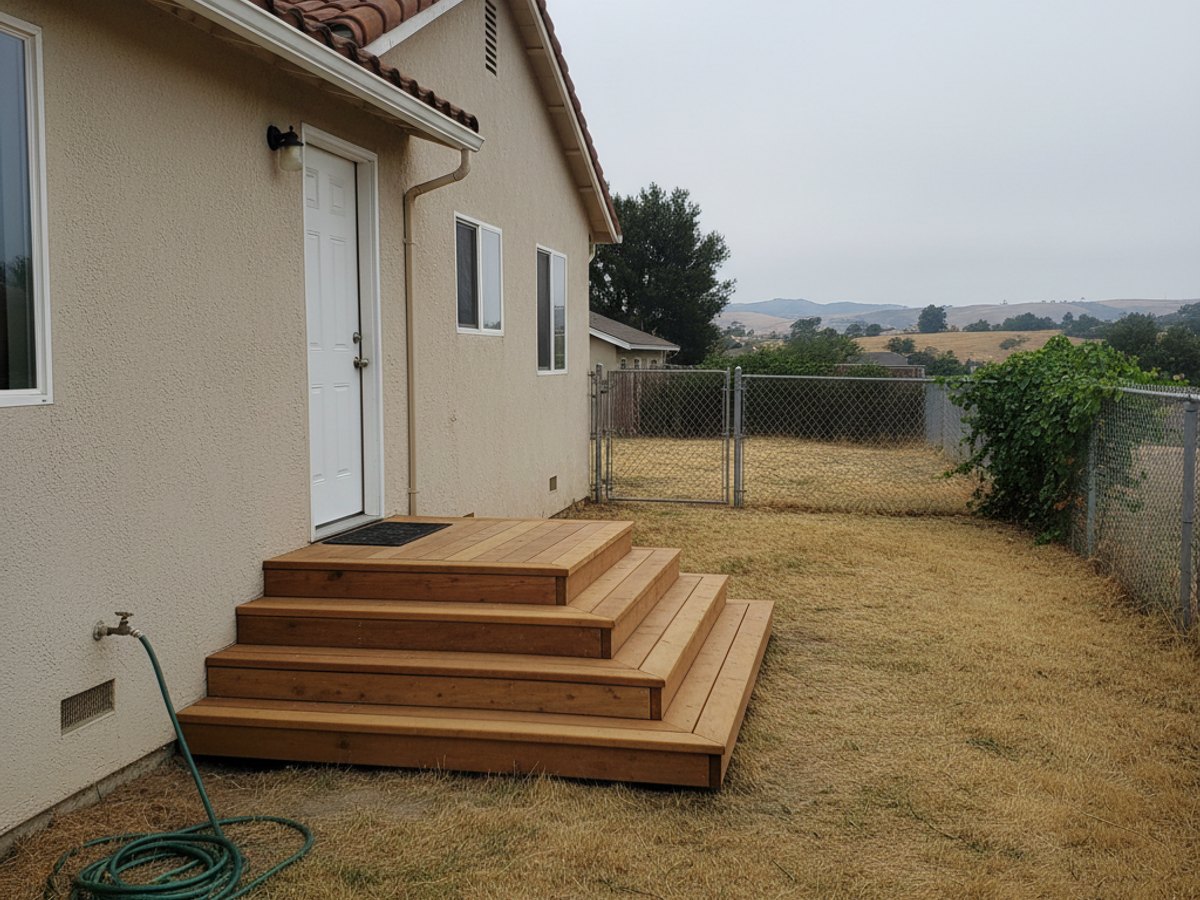
A deck looks like a simple build from the street. Boards, joists, a few posts. Underneath that is a list of things that are specific to this stretch of coast, and most of them don't show up until a contractor is standing on your lot with a tape measure and a soil probe. Here's what's actually worth checking before anyone pulls a permit.
What's actually under the deck footings
Most lots close to the water here are sitting on beach sand, which drains fast and compacts fine once it's wet, but it has less bearing capacity than a clay or loam soil. A footing that would hold a post on inland soil sometimes needs to go wider, or deeper than the usual 18 to 24 inches, to spread the load. Further inland, especially toward the Fountain Valley and Costa Mesa border, you start running into fill soil from old farmland and reclaimed wetland near Bolsa Chica, which can settle unevenly over a few years. A proper soil check before footings go in isn't optional on those lots, it's the difference between a deck that sits flat in five years and one that doesn't.
If your house was built before the 1970s in a neighborhood like Old Town or the original Huntington Harbour tracts, there's also a decent chance the original framing isn't what current code expects. Old 2x redwood ledgers and undersized posts were common then. Reusing them without checking is how a deck ends up with a soft spot nobody can explain later.
Salt air changes what hardware you buy
Standard galvanized joist hangers and screws hold up fine forty miles inland. A quarter mile from the ocean, salt air starts working on that zinc coating within a couple of years, and you'll see rust streaks on the fascia before the structure itself is actually weak. For anything within roughly a mile of the coast, stainless steel fasteners are worth the extra cost, and for railing posts and ledger bolts right on the beach side of town, 316 stainless over 304 is the better call since 316 resists chloride corrosion better.
- Ledger bolts: half-inch lag or through-bolts, spaced about 16 inches on center, stainless where the lot is coastal-facing
- Joist hangers: double-dipped galvanized at minimum, stainless near the water
- Railing hardware: this is what people touch, so corrosion here shows up fast and looks bad fast
Which permit path your lot actually falls under
Huntington Beach's Building Division handles the standard permit for any deck over 30 inches off grade, and most repairs or resurfacing jobs that touch the structure need one too, not just new builds. Footing, framing, and final inspections are the usual three stops. What catches people off guard is the Coastal Zone overlay. A meaningful chunk of the city, especially lots near Pacific Coast Highway, Huntington Harbour, and the areas bordering Bolsa Chica, fall inside the California Coastal Zone, which can mean an additional Coastal Development Permit review on top of the standard building permit. That review looks at things like view corridors and public access, and it adds time to the schedule, sometimes a lot of it.
If you're in a newer planned community like Seacliff or Brightwater, add an HOA design review to the list. Height, railing style, and even stain color can be subject to approval before the city permit is even pulled. Pull your CC&Rs before you design anything, not after.
Where the water already goes on your lot
Most HB lots were graded to shed water toward the street or a side yard, and that grading doesn't always survive decades of landscaping changes. Before a deck goes in, look at where water pools after a real downpour in January or February, which is when this area gets most of its rain in a short window. A deck built over a low spot that already collects water just adds a dry-looking surface over a wet problem, and the posts and ledger will show it first in the form of rot or rust. Beam height and joist spacing, usually 16 inches on center for most decking, also need to leave a gap to grade so air moves underneath. Decks built flush to dirt with no ventilation trap moisture against the framing, and that's a slower version of the same problem.
Matching the material to the marine layer
The marine layer sits over this part of the coast most mornings from about May through August, and it keeps everything a little damp longer than people expect, including a fresh stain job that hasn't fully cured before the afternoon sun hits it. Pressure-treated wood and cedar both hold up here but want a stain and seal cycle roughly every one to two years given the salt air and UV, not the five-year schedule you'd get away with further inland. Composite decking skips that maintenance but expands and contracts more in a day with a 60-degree morning and an 85-degree afternoon, so gapping between boards matters more here than people assume, usually an eighth to three-sixteenths of an inch depending on the brand and the board length.
None of this is complicated once somebody's walked the lot and knows what they're looking at. That's most of what the first site visit on any job is actually for, whether it's a full rebuild, a railing repair, or resurfacing an old deck that's still structurally fine underneath. If you want a second set of eyes on a lot before you commit to a design, that's the kind of walkthrough Coastal Deck Solutions does before any contract gets signed.